
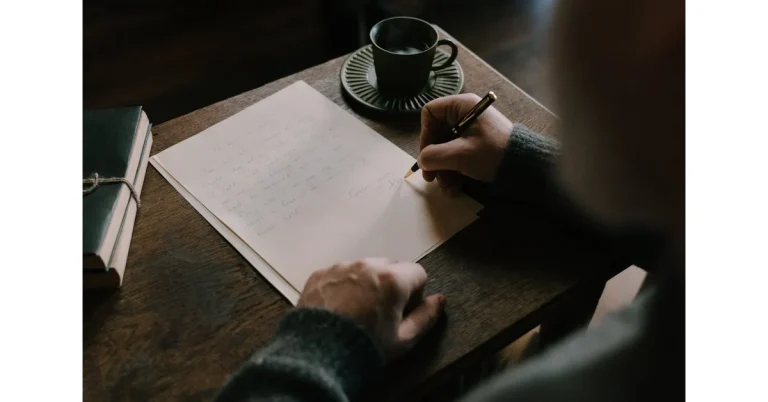
Someone you care about is going to court, and they have asked you to write a character reference. You want to help. You’re also worried about getting it wrong.
Here’s the short answer. A character reference is a signed letter that tells the court who this person is outside a courtroom, and the magistrate or judge reads it before deciding the sentence. This article is written for people writing references in criminal matters for the most part. One thing to know up front: the law on how much weight good character carries in New South Wales is changing, so the letters that land are the honest, specific ones about remorse and rehabilitation, not a list of compliments.
Below is what to put in it, a template you can copy, and the mistakes that get a reference ignored.
What a character reference actually does
The court has already heard the facts of the offence. What it hasn’t heard is who the person is on an ordinary Tuesday: whether they work, who depends on them, whether they’ve faced up to what they did, and whether this is likely to happen again.
Your letter fills that gap. It sits alongside everything else the court considers when it sentences, and in New South Wales those sentencing factors live in section 21A of the Crimes (Sentencing Procedure) Act 1999. Sentencing law differs from state to state, so check the local court’s guidance if the matter isn’t in New South Wales.
One thing it isn’t: a plea for mercy from the person being sentenced. That’s a different document, and if you’re the one facing court, our guide on asking the court for leniency covers it. A reference from the alleged victim asking for the matter to end is different again, and a letter to drop charges doesn’t work the way most people expect.
Who should write one, and who should not
A good referee is someone who knows the person well, can speak from first-hand experience, and has something real to say. Legal Aid NSW, in its guidance for people going to court over a fine, suggests employers, work colleagues, neighbours, teachers, doctors, family friends and people from clubs or community groups, and says a referee should be of good reputation without a criminal record. It also advises against asking anyone under 18.
Family members can write one. Their letter simply carries less independent weight than an employer or a coach who has no reason to take sides, so mix the sources if you can.
Don’t write one if you can’t honestly say something positive, if you don’t know what the charges are, or if you’d need to shade the truth to make it work. A referee who is guessing is easy to see through.
One thing worth knowing: character references also come up in family law parenting matters, where a court is weighing someone as a parent rather than as an offender, and the letter is written differently.
What to include
Keep it to one page, two at the very most.
Cover:
- Who you are, your occupation, and where you live.
- How you know the person, and for how long.
- That you know what they’ve been charged with, and the facts behind it.
- That you understand the letter will be read by the court at sentencing.
- What you have actually seen of their character, with specific examples rather than adjectives.
- Anything you know about what they’ve done since: counselling, a program, an apology, changes at home or at work.
- What a conviction or a licence loss would mean for their work, their family or their study, if you know.
The examples are the part that does the work. “He’s a good person” tells the court nothing. “He’s covered the early shift for eleven months and has never once let the team down” tells it something it can weigh.
Character reference for court: a template you can copy
Replace everything in brackets and delete these notes before you print it. Type it, print it on plain white A4, and sign it by hand. The letter itself stays formal, so leave the wording plain.
[Date]
To the Presiding Magistrate [or To the Presiding Judge, for a District or Supreme Court matter]
[Name of court, for example Parramatta Local Court]Re: [Full name of the person], matter listed [date if known]
Your Honour,
My name is [full name]. I am [occupation] and I live in [suburb]. I have known [name] for [number] years, as [their employer, their neighbour, a friend through the football club].
I am aware that [name] has been charged with [describe the offence in plain terms], and I have been told the circumstances behind it. I understand this letter will be read by the court when [name] is sentenced.
[Two or three short paragraphs of what you have seen first-hand. Use examples with detail: what they do, who relies on them, how they have behaved over the years you have known them.]
Since this happened, [name] has [describe anything concrete: told you about it themselves, apologised, started counselling, completed a program, cut back drinking, kept working]. [Only if true, and say why you believe it: what they said or did that showed you they understand how serious this is.]
[If relevant: what a conviction would mean for their employment, licence, study or care of family.]
I am happy to be contacted if the court needs anything further.
Yours faithfully,
[Signature]
[Printed name]
[Phone number and email]
What not to put in a character reference
This is where a lot of well-meaning letters do damage.
- Do not suggest a sentence. The Magistrates Court of Victoria puts it plainly in its guidance on character references: a reference should not address what sentence the court is to impose. I have never seen it land any differently in a NSW Local Court. Suggesting they be let off with a fine reads as telling the magistrate their job.
- Do not say it was completely out of character if there are prior matters. The court has the record in front of it. A claim it can disprove in one glance takes the rest of your letter down with it.
- Do not minimise or excuse the offence. No “it was only”, no blaming the police, the complainant or the circumstances.
- Do not write anything you cannot stand behind. A referee’s job isn’t to persuade at any cost. Overstating is obvious, and it can hurt the person you’re trying to help.
- Do not pad it. Three specific paragraphs beat two pages of praise.
- Do not leave it unsigned or undated, and don’t send it without your contact details.
A word of caution on group letters. Ten near-identical references from the same workplace look organised, not sincere. Fewer, more personal letters carry more.
How to write it, step by step
- Ask the person, or their lawyer, exactly what the charges are and what the facts say.
- Ask when the sentencing date is, and work backwards from it.
- Write down two or three concrete things you have actually seen, before you start drafting.
- Draft it in your own words. Don’t copy a sample letter line for line; magistrates read hundreds of these.
- Read it back and cut anything you couldn’t defend if the court asked you about it.
- Type it, date it, sign it, and add your phone number.
- Give it to the person’s lawyer well before the hearing, not on the morning.
Writing for specific offences
Assault or domestic violence. Say nothing about the complainant and nothing about the incident itself. Stay on what you have seen of the person over time and what has changed since, such as a behaviour change program or counselling. If there is an AVO or domestic violence matter running alongside the charge, do not mention it in your letter.
Drink driving and drug driving. Courts want to see insight into the risk, not just inconvenience. If you know they’ve stopped drinking, started a program, or arranged another way to get to work, say so. Being licence-dependent for work is worth mentioning, but as context, not as an argument for a lighter penalty.
Drug matters. Treatment, counselling and steady employment are the details that matter here. If you know the person is in a program, say what it is and how long they’ve been in it.
How to address it, and when to hand it over
Address the letter to the presiding judicial officer. For a Local Court matter, Legal Aid NSW recommends addressing it “To the Presiding Magistrate”. The greeting inside is “Your Honour”. In the District or Supreme Court it’s a judge, and the greeting stays “Your Honour”.
Legal Aid NSW also suggests taking the original plus three copies to court: the original stays with the court, one copy goes to the prosecutor, and the person keeps the rest.
Do it early. The reference goes to the person’s lawyer first so it can be checked, and a letter that turns up outside the courtroom on the morning of the hearing may not be used at all.
Has the law on good character changed in NSW?
Yes, and it’s the part almost every guide online has missed.
New South Wales has passed the Crimes (Sentencing Procedure) Amendment (Good Character at Sentencing) Act 2026, which prevents prior good character being taken into account as a standalone mitigating factor at sentencing. It received assent on 18 May 2026.
Here’s the catch. It starts on a day to be appointed by proclamation, and as at August 2026 that day has not been set, so good character still sits among the mitigating factors a NSW court weighs. Once it commences, that changes.
What does that mean for your letter? Write it for the law as it is heading, not as it was. Character on its own is thinning out as a discount. What still carries weight is the person’s honesty about what they did, genuine remorse, insight into why it happened, and real steps towards rehabilitation. Those are the things a court can act on, and they’re the things only someone who knows the person can describe.
Does a character reference actually make a difference?
It can, when it’s specific. When character is argued in a courtroom, it never sounds like “he is a good person”. It sounds like detail: their age, no criminal history, twelve years in the same job. I think that’s the level of detail worth aiming for, and it’s the difference between a letter that gets read and a letter that gets skimmed.
The honest way to see it is this. A reference won’t decide the case. It fills in the part of the picture nobody else in the room can fill in, and on a finely balanced sentence that picture matters.
What to do next
If you’re the person facing court, ask your lawyer how many references to gather and who should write them, before anyone starts drafting. If you’re writing one, get it to that lawyer early enough to be checked.
As family lawyers, we deal with matters like this all the time. If there’s an AVO, a parenting issue or a separation sitting behind this court matter, that’s what we do. Call 1300 614 732 or book a free discovery call. Honest advice, no pressure.
Frequently Asked Questions
What is a character reference for court in Australia?
It’s a signed letter from someone who knows the person facing court, telling the magistrate or judge who that person is outside the offence. It’s read at sentencing, after a plea of guilty or a finding of guilt, alongside everything else the court considers.
Who can write a character reference for court?
An employer, colleague, neighbour, teacher, doctor, family friend or club member who knows the person well. Legal Aid NSW suggests a referee be of good reputation without a criminal record, and advises against asking anyone under 18. Family can write one, but independent referees carry more weight.
Is there a character reference for court template for Australia?
Yes, there’s one on this page you can copy. Swap the bracketed prompts for your own words, keep it to a page, then print it and sign it by hand. Don’t copy it line for line without changing anything, because magistrates read hundreds of these and a template nobody has personalised is easy to spot.
Does good character still reduce a sentence in NSW?
As at August 2026, yes. Good character sits among the mitigating factors in section 21A of the Crimes (Sentencing Procedure) Act 1999. NSW has passed a 2026 amendment removing it as a standalone mitigating factor, and that amendment commences on proclamation. Focus the letter on remorse and rehabilitation either way.
What should you not put in a character reference?
Do not suggest what sentence the court should impose. Do not claim the conduct was out of character if there are prior matters. Do not minimise or excuse the offence, don’t exaggerate, and don’t write anything you couldn’t defend if the court asked you about it.
How do you address a character reference to the court?
Address it to the presiding judicial officer. In the Local Court, use “To the Presiding Magistrate” and open with “Your Honour”. In the District or Supreme Court it’s a judge, and the greeting stays “Your Honour”. Date it, sign it, and include your contact details.